Todd Smith
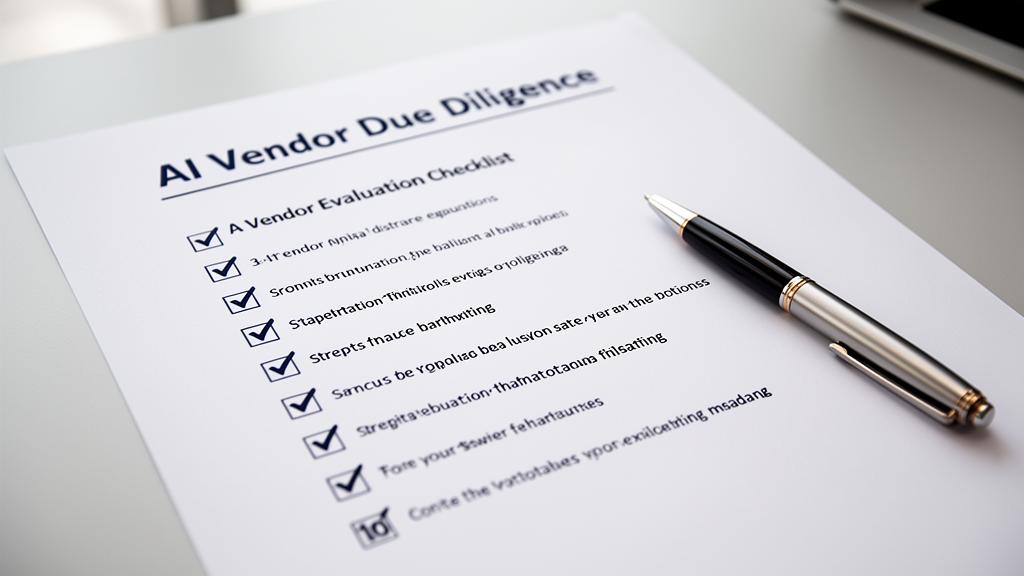
AI Vendor Due Diligence Checklist

10 Questions for Your AI Vendor

A Protection Guide for Automotive Retail

Separate substance from hype before you sign

AI vendors are flooding the market with buzzwords, thin products, and big promises. These 10 questions will help you protect your dealership.

Download the PDF

Download the PDF

Keep this guide handy for your next vendor meeting.

Get the PDF
1

What data do you need from us, and who owns the outputs?

Many AI vendors require broad data access but retain rights to the insights, models, or aggregated data they create. Understand exactly what data flows to the vendor, where it's stored, and whether you maintain full ownership of outputs. If you cancel, do you get your data back? In what format?

2

How do you handle identity resolution and data hygiene?

AI is only as good as the data it learns from. Ask how the vendor deduplicates customer records, handles outdated contact information, and resolves identity across multiple touchpoints (web, phone, in-store). Dirty data in means garbage insights out.

3

Is the model trained per dealership, or shared?

Some vendors use shared models trained on aggregate data from many dealerships. Others train models specifically on your data. Shared models may miss your market's nuances. Dedicated models require more data but can be more accurate for your specific operations.

4

How do you prevent the AI from making up answers?

AI hallucinations, where the model confidently generates false information, can damage customer relationships and create liability. Ask what guardrails exist, whether responses are grounded in your actual data, and how the system handles questions outside its knowledge.

5

What is your explanation layer?

Black-box AI that can't explain its recommendations is a liability. Ask how the system explains why it made a recommendation, predicted an outcome, or flagged a customer. Your managers need to understand and trust the AI's reasoning.

6

What does it cost to operate per rooftop?

AI pricing can be opaque. Get clear answers on per-rooftop costs, usage-based fees, implementation costs, training costs, and what happens to pricing after the initial contract term. Ask about hidden costs like API fees, data storage, or premium features.

7

What workflows are automated out of the box?

Distinguish between AI that requires extensive customization and AI that works immediately. Ask for specific examples of workflows that work on day one versus those requiring configuration. Get references from dealerships of similar size who are live on those workflows.

8

How do you integrate with my DMS, CRM, and website?

Integration depth matters. Surface-level integrations may only read data. Deep integrations can write back, trigger actions, and maintain bidirectional sync. Ask about specific integrations with your exact systems and the timeline to full integration.

9

What compliance, privacy, and security standards do you meet?

Ask about SOC 2 certification, data encryption (at rest and in transit), CCPA/state privacy law compliance, and how they handle consumer data deletion requests. Get documentation, not just verbal assurances. Ask about their incident response process.

10

How do you measure success?

Vague promises of 'improved efficiency' aren't enough. Ask for specific KPIs the vendor tracks, how they establish baselines, and what reporting you'll receive. Align on success metrics before signing so there's accountability after implementation.

Download the Full Guide

Get the printable PDF version to bring to your next vendor meeting.

Free Resource

Get the 10 Questions AI Vendor Checklist

A protection guide to help you evaluate any AI vendor. Know exactly what to ask before you sign.

We respect your privacy. Unsubscribe anytime.

Found this valuable?

Share it with a colleague who needs to hear this.

Share